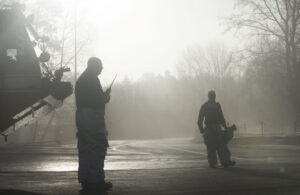
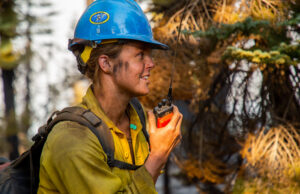
Two-way radio is one of the most proven communication tools ever built. It has been around for nearly a century, yet it is still the first choice for teams that need instant, reliable, one-to-many communication. What has changed is who uses it and how. Here is a look at how two-way radio spread across industries over time, and where it is headed.
Military Roots
Portable two-way radio came of age during World War II. Galvin Manufacturing, the company that would become Motorola, produced the SCR-300 backpack “walkie-talkie” and the handheld SCR-536 “Handie-Talkie.” For the first time, soldiers in the field could talk to each other on the move. The technology, manufacturing know-how and trained operators that came out of the war set the stage for civilian use.
Public Safety Leads the Way
Police departments were early adopters, moving from one-way dispatch broadcasts in the 1920s to two-way mobile radio in patrol cars in the 1930s. After the war, fire departments, ambulance services and other public safety agencies followed. Over the decades, public safety pushed radio forward: trunked systems shared channels across large agencies, and standards like APCO Project 25 (P25) made it possible for different departments and jurisdictions to talk to each other during major incidents.
Utilities, Transportation and Industry
By the 1950s and ’60s, utilities, taxi fleets, trucking companies and railroads were using mobile radios to dispatch crews and vehicles. Construction sites, factories and mines adopted portable radios to coordinate work and keep people safe. In these industries, radio’s biggest advantage was the same as it is today: push a button and your whole crew hears you instantly, with no dialing and no waiting.
Business and Commercial Use Takes Off
As radios became smaller, cheaper and easier to use, they spread into everyday business. Hotels, hospitals, schools, retailers, warehouses, event venues and property management companies all came to rely on two-way radio. Today, a hotel’s housekeeping and maintenance teams, a school’s administrators and resource officers, and a warehouse’s floor staff are just as likely to carry a radio as a police officer.
The Move to Digital
The biggest shift in recent years has been the move from analog to digital. FCC narrowbanding rules that took effect in 2013 required most business and public safety VHF and UHF radio systems to use spectrum more efficiently, which pushed many organizations to upgrade. Digital platforms like Motorola’s MOTOTRBO™ brought:
- Clearer audio with less background noise, especially at the edge of coverage.
- Roughly double the capacity on the same licensed channel.
- Longer battery life.
- Data features like text messaging, GPS location tracking, lone worker and man-down alerts.
Learn more about the benefits on our Why Digital? page.
From Voice Tool to Connected Platform
Today’s radios are part of a much bigger system. Organizations connect them to dispatch consoles, alarm and telemetry systems, work-ticketing apps and video. Broadband push-to-talk services such as WAVE PTX™ extend radio-style communication over cellular and Wi-Fi networks, so teams can talk nationwide and connect radio users with smartphone users. Inside large buildings, distributed antenna systems make sure signals reach basements, stairwells and parking garages.
How Different Industries Use Radio Today
- Public safety: mission-critical voice, interoperability between agencies and emergency alerts.
- Education: campus safety, emergency lockdown coordination and daily operations.
- Healthcare: security, facilities and patient transport teams.
- Hospitality: fast response between front desk, housekeeping, engineering and security.
- Manufacturing and warehousing: production coordination, safety alerts and intrinsically safe radios for hazardous areas.
- Construction and utilities: rugged radios, wide-area coverage and lone worker protection.
Still Going Strong
Despite smartphones being everywhere, two-way radio remains the tool teams count on when communication can’t fail. It is instant, it works without a cellular network, and it is built to survive the job. What has changed is that today’s radios do far more than carry voice.
Communications Express has helped organizations across Northern Virginia, Maryland and Washington D.C. choose, deploy and maintain two-way radio systems for decades. Whether you are upgrading from analog, expanding coverage or equipping a new team, request a quote or contact us to talk about the right solution for your industry.